Myth Busting · Argan
Argan oil for frizz: shine, not repair
Argan oil’s value for frizz is primarily cosmetic: its fatty acids and surface‑active lipids coat the hair, smooth the cuticle and add shine. The literature here shows compositional differences, processing effects, and antioxidant activity — useful context for styling — but not clinical proof that oil restores broken ends or structurally repairs hair.
Short version: argan oil can make hair look smoother and shinier because it’s an oil with a particular fatty‑acid and antioxidant profile; it does not turn a split end back into intact hair. That distinction — cosmetic coating versus structural repair — is the bit most marketing obfuscates.
What the literature here actually shows about the oil itself: argan oil is consistently reported to be rich in oleic and linoleic fatty acids and to contain substantial tocopherols and other antioxidant compounds, features that underlie its oxidative stability and sensory properties when applied topically or used in formulations.1,2,3,4
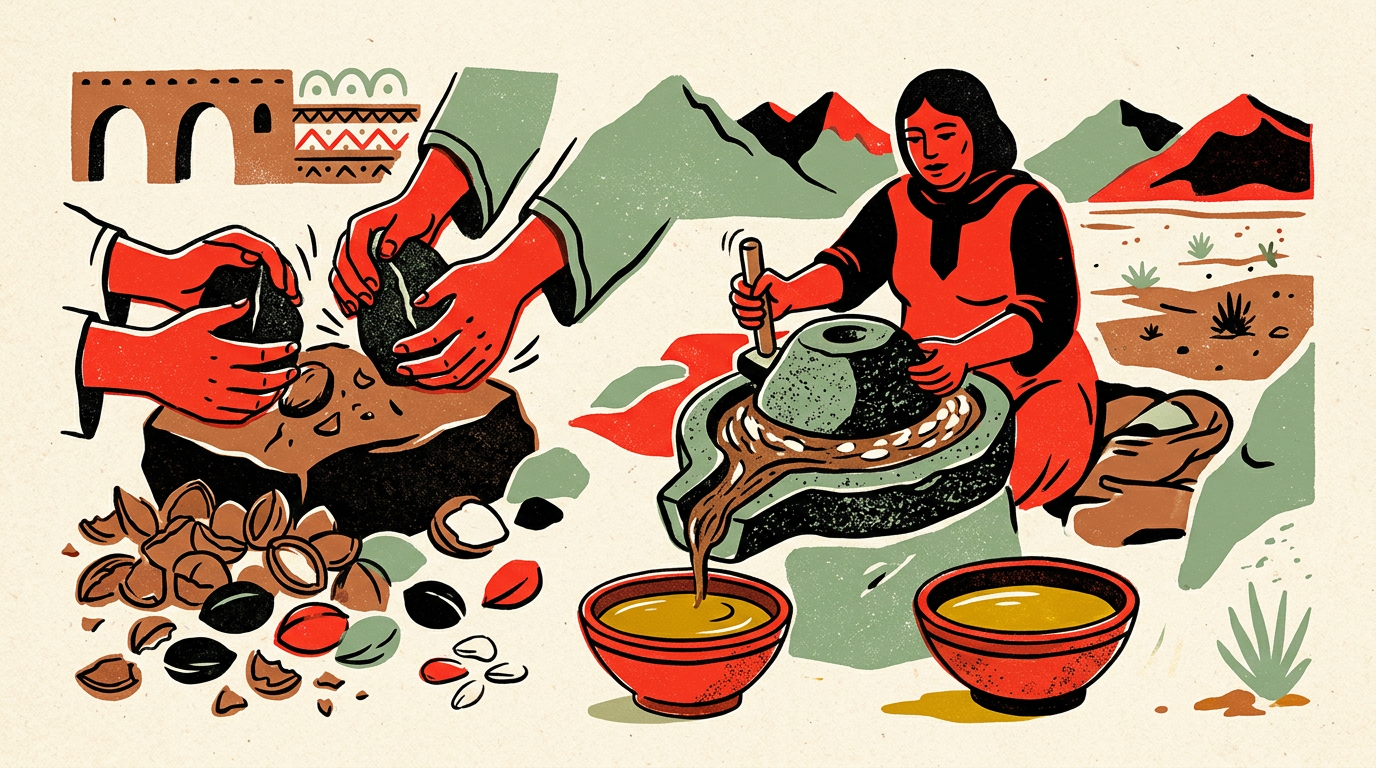
How oils reduce frizz
Frizz is mostly about the hair shaft surface. Oils sit on the cuticle, reducing micro‑roughness, limiting moisture exchange and improving light reflection — the net effect is smoother appearance and more shine. That explanation is general hair science and describes how any oil‑based finish works.
Oils sit on the cuticle, reducing micro‑roughness, limiting moisture exchange and improving light reflection
Argan oil’s composition makes it a plausible, and often pleasant, choice for this role. Analyses show a high proportion of unsaturated fatty acids (notably oleic and linoleic acids) and measurable levels of tocopherols and phenolics; those components influence feel, spreadability and resistance to rancidity in storage and in formulas.1,2,3,4
Processing alters those performance‑relevant constituents. Mechanical cold‑pressing, solvent extraction and roasting change fatty‑acid profiles, sterol fingerprints and volatile aromas; physical refining and deodorization severely reduce tocopherols and can cut oxidative stability, with implications for shelf life and sensory quality of cosmetic products.3,5
Why “repair” claims don’t hold up
‘Repair’ is a marketing word, not a hair‑biology term. A split end is a physically broken fibre. Topical oils can smooth and glue fibres together temporarily, reducing the visual look of damage, but they cannot restore the original continuity of the cuticle and cortex.
None of the studies in this set test argan oil as a treatment to restore split ends or rebuild hair structure. The human trial cited here tested a combination cream after laser skin procedures rather than hair endpoints, and formulation studies focus on antioxidant or texture properties rather than structural repair of hair.6,7
If you see a claim that argan oil fixes split ends permanently, that claim exceeds what the available evidence supports. Oils provide surface conditioning; trimming remains the definitive fix for physically split fibres.
Pure argan versus serums that name it
Formulations matter. When argan oil appears in a product label, it may be present as the sole oil or as one of several lipids within an emollient matrix. Studies here show both pure‑oil characterizations and oil‑containing formulations; the latter don’t let you attribute effects to argan oil alone.1,2,3,6,7
Two practical takeaways from the analytical work: (1) enrichment or maceration with herbs boosts measurable polyphenols and antioxidant activity in argan oil, which can help oxidative stability and scent masking in a formula; and (2) aggressive refining removes tocopherols and can markedly reduce the oil’s antioxidative defenses, shortening useful shelf life under stress conditions.5,8,9
aggressive refining removes tocopherols and can markedly reduce the oil’s antioxidative defenses
So a lightweight commercial ‘argan’ serum might rely on silicones or other synthetic emollients for long‑lasting smoothing, with argan listed mainly for marketing or secondary benefits. Formulation labels and ingredient order matter if you care which mechanism is doing the smoothing.6,7
Using argan oil without weighing hair down

Texture depends on oil composition and how much you use. The unsaturated profile of argan oil tends to give it a fluid, spreadable feel compared with heavier saturated fats, but it can still weigh very fine hair down if applied in large quantities at the roots. Choose sparing application to mid‑lengths and ends and warm a small amount between the palms first; that is general cosmetic practice rather than a finding from these studies.1,2,3
If product longevity and non‑greasy feel are priorities, remember two points drawn from the studies: processing affects sensory and oxidative properties (so a refined oil may feel and smell different from a traditional cold‑pressed oil), and formulators can alter performance by pairing argan oil with other emollients or with polymers that provide longer surface smoothing.3,5,7
Finally, if you have scalp or skin conditions, consult a dermatologist before adding oils routinely; the studies here include systemic and topical safety data in non‑hair contexts but do not substitute for clinical guidance on individual skin or scalp disorders.4,6
Bottom line for the shampoo aisle
Argan oil does what oils do: it coats the hair, tames visible frizz and adds shine. That cosmetic effect is supported by the oil’s fatty‑acid and antioxidant composition reported across compositional and review papers, and by work showing how processing and enrichment change those profiles — which in turn affects feel and shelf life.1,2,3,4,5,8,9
What the current literature here does not show is clinical evidence that argan oil structurally restores split ends or permanently ‘repairs’ damaged fibres. When you want genuine structural improvement, cutting back on mechanical and chemical stress and, where appropriate, trimming are the interventions with predictable outcomes.6,7
If you want the visual benefits without heaviness: use small amounts on mid‑lengths and ends; check whether the product is a true oil or a silicone‑dominant serum; and store oils sensibly because processing and refinement affect oxidative stability.3,5,7
In the Botanical Index
Sources
- Domesticated Argania spinosa in Eastern Morocco: HPLC-DAD/GC-MS Chemical Profiling, Antioxidant and Antidiabetic Activities, and Network Pharmacology-Guided Molecular Docking. — Azizi SE, Daoudi NE, Roubi M, Alami Merrouni I, Hendrawan AF, Bnouham M, Berrichi A, Dalli M, Legssyer B, Gseyra N. · International journal of molecular sciences · 2026
- Comparative Study of the Physicochemical Properties and Nutritional Quality of Argan Oil from Endemic and Planted Argania spinosa (L.) Fruit Trees in South-West Algeria. — Ould Safi M, Di Bella G, Nava V, Albergamo A, Bencheikh A, Boudeffeur S, Boughalia M, Kechairi R, Potortì AG. · Foods (Basel, Switzerland) · 2026
- Exploring the Impact of Extraction Methods on the Nutritional and Sensory Profiles of Argan Oil from Mostaganem Kernels. — Aridj T, Boukezzoula N, Tefiani C, Benabdelmoumene D, Chaalel A, Berrahal N, Tahlaiti A, Bentounes A, Różański H, Szumny A. · Foods (Basel, Switzerland) · 2026
- Argan Oil: A Natural Bioactive Lipid Modulating Oxidative Stress and Inflammation. — Rabbaa S, Bouchab H, Laaziouez Y, Limami Y, Nasser B, Andreoletti P, Cherkaoui-Malki M, El Kebbaj R. · Antioxidants (Basel, Switzerland) · 2025
- Effects of physical refining process on quality and stability of argan oil (Argania Spinosa (L.) Skeels). — Asbbane A, Bousaid Z, Guillaume D, El Harkaoui S, Matthäus B, Charrouf Z, Goh KW, Srasom N, Bouayahya A, Gharby S. · Scientific reports · 2024
- Efficacy and safety of combination cream of stimu-tex AS™ (spent grain wax, Argania Spinosa Kernel oil, Butyrospermum Parkii (shea butter) extract), and saccharide isomerate after fractional CO2 laser procedure: split-face, double blinded, randomized controlled trial. — Sitohang IBS, Arimuko A, Norawati L, Maria R, Yulyana C, Nugraha RS, Amanda V, Indrafatina A, Amalia I. · Lasers in medical science · 2025
- Grape Pomace Extract-Loaded Liposomes Enriched Cream Formulations for Skincare. — Radulescu C, Olteanu RL, Pavaloiu RD, Sha'at F, Stanciu G, Tudorache MN. · Antioxidants (Basel, Switzerland) · 2026
- Ultrasound-assisted enrichment of argan oil (Argania spinosa L.) with thyme (Thymus vulgaris L), oregano (Origanum vulgare L.) and saffron (Crocus sativus L.) powders: Impact on bioactive compounds and oxidative stability. — Oubannin S, Asbbane A, Hallouch O, Nouj N, Goh KW, Bouyahya A, Gharby S. · Ultrasonics sonochemistry · 2025
- Green enrichment of argan oil (Argania spinosa L.) with thyme (Thymus vulgaris L.) and oregano (Origanum vulgare L.) leaves: Evaluating quality and stability improvements. — Oubannin S, Asbbane A, Goh KW, Singh J, Zafar I, Bouyahya A, Gharby S. · Food chemistry: X · 2024
Discussion
0 commentsShare experiences, questions and sources. Be kind, and please don't give medical advice. Comments are checked before they appear, and anything that reads like a treatment claim goes to our editors first.
Join the conversation
A free reader account lets you comment and reply to other readers.
No comments yet. Start the discussion.