Botanical Index / everything about
Rosemary
Evergreen kitchen herb with a head for haircare
Salvia rosmarinus

The short version
Rosemary essential oil is steam‑distilled from the leaves and flowering tops. It is strong, so people dilute it before it goes on skin or scalp. Folks reach for it in scalp oils and for leaf‑extract creams that lean into antioxidant stories.
- Family
- Lamiaceae
- Part used
- Leaves (essential oil, extract)
- Comes from
- Mediterranean
Good for?
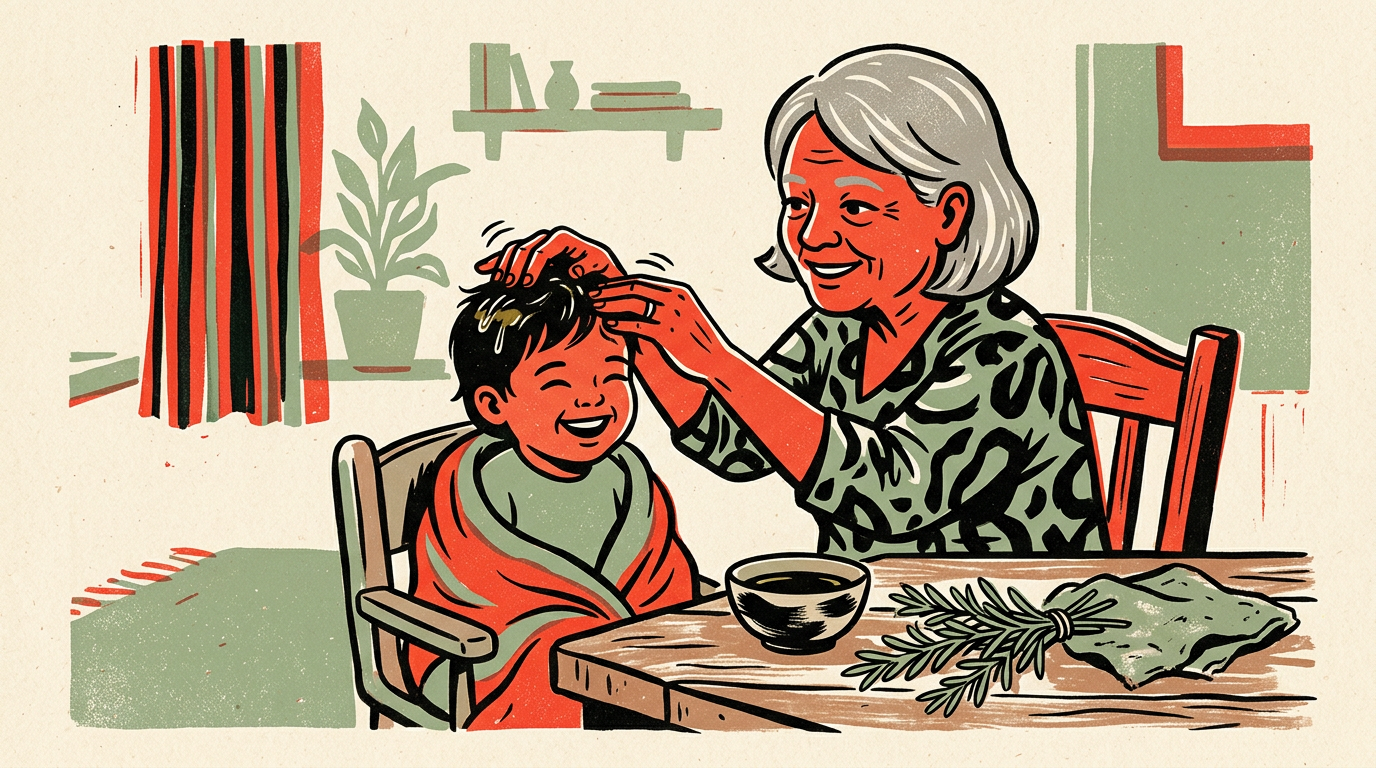
Used in scalp massage oils and tonics aimed at fuller‑looking hair. A recent randomized trial of rosemary‑based blends and a review of earlier studies suggest possible improvements in hair measures over a few months, but blends, modest sample sizes and short timelines keep confidence modest. In labs and animal models, rosemary components are explored for skin repair and anti‑aging directions, and formulators test antimicrobial dressings—human cosmetic data here are still early.
Does it actually work?
Early days.
A few small studies on people. Interesting, not settled.
Evidence grade 3 out of 5.
“A double‑blind, randomized, three‑arm trial reported hair and scalp outcomes with rosemary‑containing blends over 90 days; the presence of other oils and the short duration limit how much we can credit rosemary alone.”
What the studies say
A double‑blind, randomized, three‑arm trial reported hair and scalp outcomes with rosemary‑containing blends over 90 days; the presence of other oils and the short duration limit how much we can credit rosemary alone. A focused review notes clinical studies where rosemary extract users showed gains versus controls, but details vary and larger, independent trials are needed. An ethnopharmacology mini‑review mentions rosemary oil’s proposed microcirculation effects, again based on emerging data. Beyond hair, mouse work finds a rosemary‑leaf constituent (carnosic acid) can speed wound closure and reduce scarring via TRPA1, and in‑vitro studies suggest anti‑aging‑like activity; these are not yet robust human cosmetic trials. Antimicrobial dressings with rosemary resin oil work in lab tests, but real‑world skin outcomes remain to be shown.
Read this first
Essential oil is concentrated—dilute well and patch test before wider use. Some people may experience stinging or irritation, especially on sensitive scalps or faces. Stop using if redness or discomfort persists.
EFSA has assessed rosemary tinctures and rosemary essential oil as flavouring additives for animal feed and found proposed levels safe for that use; this does not constitute a cosmetic approval.
The stories
1 in the JournalOrigins · Scalp
Scalp oiling: tradition, trend and what the science says
Scalp oiling is an old care ritual whose modern popularity rests on texture, comfort and smell as much as any biological effect. Laboratory work shows coconut oil can change hair-fibre mechanics and has antibacterial activity in vitro; a randomized trial in preterm infants shows topical coconut oil increases skin moisture. Clinical evidence for scalp oiling specifically is thin.
- Hair
Reviewed
Sources
- Safety and efficacy of a feed additive consisting of an essential oil derived from the flowering aerial parts of Salvia rosmarinus Spenn. (rosemary oil) for use in all animal species (FEFANA asbl). — EFSA Panel on Additives and Products or Substances used in Animal Feed (FEEDAP), Villa RE, Azimonti G, Bonos E, Christensen H, Durjava M, Dusemund B, Gehring R, Glandorf B, Kouba M, López-Alonso M, Marcon F, Nebbia C, Pechová A, Prieto-Maradona M, Röhe I, Theodoridou K, Bastos ML, Benfenati E, Brantom P, Chesson A, Schlatter J, Westendorf J, Manini P. · EFSA journal. European Food Safety Authority · 2025
- Review on natural remedies for hair growth promotion with a focus on rosemary. — Almutairi AG, Altheyab FY, Alhawsawi W, Shadid A, Alkhalifah A. · Dermatology reports · 2026
- Botanical drug preparations for alleviating hair loss in menopausal women: a global ethnopharmacological mini-review. — Huang Z, Zhao WJ, Gao YJ, Huang ZR, Huang QR, Cai SZ, Bi MH. · Frontiers in pharmacology · 2025
- Rosmagain™ as a Natural Therapeutic for Hair Regrowth and Scalp Health: A Double-Blind, Randomized, Three-Armed, Placebo-Controlled Clinical Trial. — Patel MN, Tuli N, Patel N, Merja A. · Cureus · 2025
- Carnosic acid in topical rosemary extract enhances skin repair via TRPA1 activation. — Rapp E, Pang J, Saeednia B, Prouty SM, Reilly CA, Leung TH. · JCI insight · 2025
- Rosemary Aqueous Extract as a Natural Alternative to Retinol for Skin Aging Intervention. — Gao P, Zhang H, Gu X. · Pharmaceuticals (Basel, Switzerland) · 2026
- Rosemary resin-oil incorporation into chitosan films: development of natural antimicrobial bioactive dressings. — Polo AB, Gomes TV, Oliveira MS, Cardoso MM, Tomé BV, Lemos ASO, Tavares GD, Clemente VB, Apolônio ACM, Fabri RL. · Natural product research · 2025
- Safety and efficacy of feed additives consisting of rosemary tinctures obtained from the leaves of Salvia rosmarinus Spenn. for use in all animal species (FEFANA asbl). — EFSA Panel on Additives and Products or Substances used in Animal Feed (FEEDAP), Villa RE, Azimonti G, Bonos E, Christensen H, Durjava M, Dusemund B, Gehring R, Glandorf B, Kouba M, López-Alonso M, Marcon F, Nebbia C, Pechová A, Prieto-Maradona M, Röhe I, Theodoridou K, Bastos ML, Benfenati E, Brantom P, Chesson A, Schlatter J, Westendorf J, Manini P. · EFSA journal. European Food Safety Authority · 2025
- Single hair fiber assessment techniques to discriminate between mineral oil and coconut oil effect on hair physical properties. — Kaushik V, Chogale R, Mhaskar S. · Journal of cosmetic dermatology · 2021
- Antimicrobial Potential of Cocos nucifera (Coconut) Oil on Bacterial Isolates. — Bhardwaj V. · Advances in experimental medicine and biology · 2025
- The Effect of Coconut and Frankincense Oils on the Biofilm Growth of Streptococcus mutans. — Alghamdi N, Alshamrani L, Alboryah S, Alsenan JF, Alshehri T, Abogazalah NN, Balhaddad AA. · F1000Research · 2025
- The effects of coconut oil and moisturising lotion on skin condition and vital signs in preterm neonates: A randomised controlled trial. — Güner Başara S, Kahraman Berberoğlu B, Çalişir H, Sözkesen Z, Emirhan M, Şahin S. · Journal of pediatric nursing · 2026