Skip to content
JournalBotanica home

Jobo

Journal Botanica

An independent field guide to the plants and oils in skin and hair care: what each one is, how it has been used, and what the research actually shows.

Vol. 1 · # 0001

Long Read · Rosehip

Rosehip oil for your face: what it can and can’t do

Journal Botanica Editors · Last reviewed November 3, 2026 · 12 sources

Rosehip seed oil is a light, fast-absorbing vegetable oil pressed from the seeds of wild roses. It is commonly prized in skincare for its unsaturated fatty-acid profile, carotenoids, and small amounts of vitamin A precursors, which give it a thinner feel than heavier vegetable oils and a pale orange tint.

Expectations for rosehip oil range from sensible—smoother, less dry skin—to optimistic—fading scars and lines. The evidence behind those claims is mixed: there is credible preclinical work and a few small human studies, but much of the human data tests multi-ingredient products or oral rosehip preparations rather than the plain topical oil. [1, 2, 3, 4] Continue reading
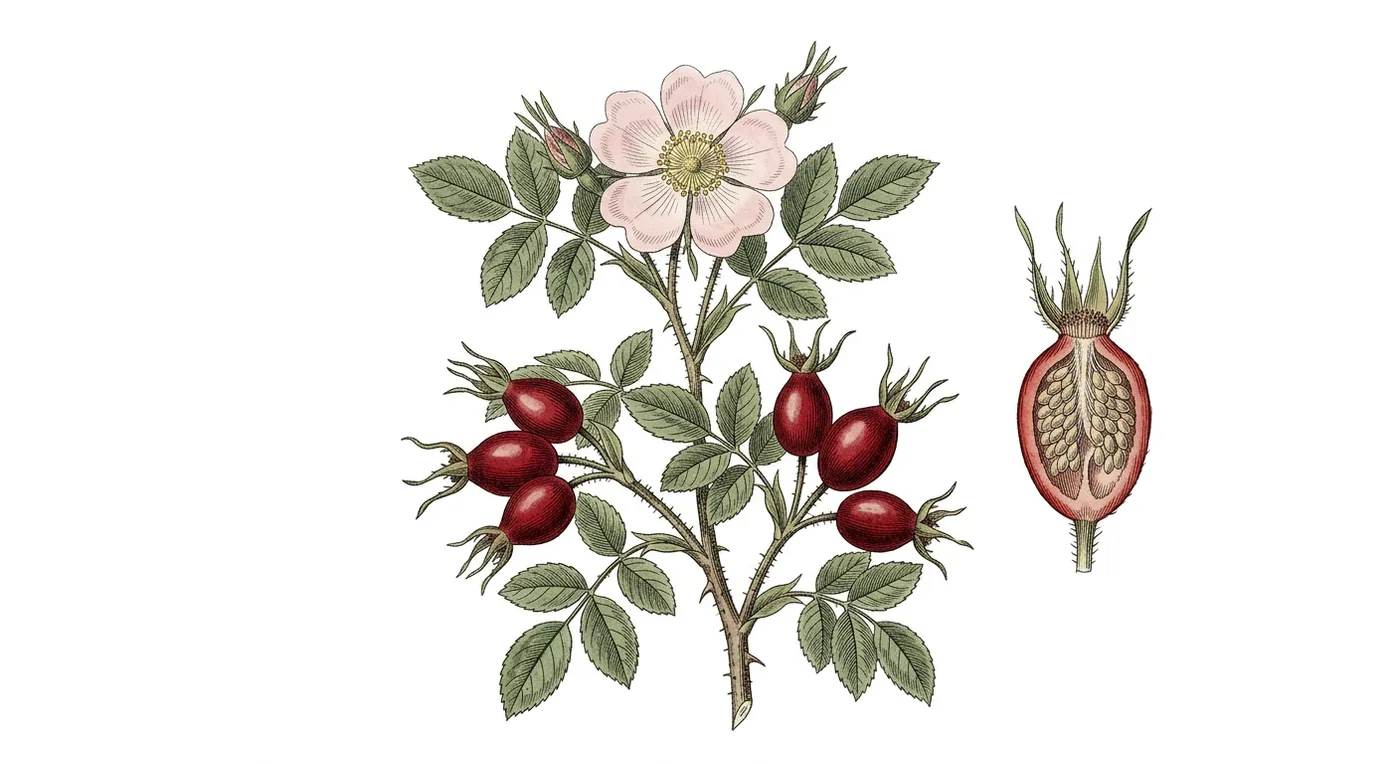

Anatomy of a rosehip

Botanical plate of a dog rose branch with a pink flower, leaves and red hips, beside a cut hip showing its seeds
Illustration
  1. The flower. Pretty, fleeting, and not where the oil comes from.

  2. The seeds. Cold-pressed to make rosehip seed oil, rich in linoleic and alpha-linolenic acids.

  3. The hip. Famous for vitamin C, most of which stays in the fruit and never reaches the oil.

  4. The color. Carotenoids give good oil its amber-orange tint. Clear oil is usually refined.

The Guest Column

The people I know with the calmest skin are not the ones with the most products. They are the ones who found three things that worked and stopped looking.

Ink portrait of Ada Whitlock, a woman with grey hair pinned back and a calendula flower tucked behind her ear.
Ada Whitlock

Herb grower and soapmaker, 22 years

The case for a boring skincare shelf

After twenty-two winters of growing herbs and watching hands, a grower argues the kindest routine is the one you stop changing.

Read the column

How we grade evidence

  1. Level 1: In a dish
  2. Level 2: In animals
  3. Level 3: Small human study
  4. Level 4: Controlled trial
  5. Level 5: Review of many trials

Every article and Index entry carries a stamp showing the strongest kind of evidence behind its main claim.

Latest from the Journal

Research Desk · Pumpkin seed

Pumpkin seed oil and thinning hair

One randomized, placebo‑controlled trial found men taking oral pumpkin seed oil capsules had a meaningful hair‑count gain; animal studies and small topical trials add plausible mechanisms but do not settle whether rubbing oil on your scalp will help. Evidence is suggestive but thin and largely unreplicated.

  • Hair

Evidence Check · Oat

Oat and colloidal oatmeal: the botanical dermatologists actually recommend

Colloidal oatmeal is one of the few botanicals with randomized trials and mechanistic lab work supporting its use for dry, itchy and eczema-prone skin. The strongest evidence is for formulated topical products containing colloidal oat or its extracts; many studies test finished products or combination formulas rather than isolated oat constituents.

  • Skin
  • Body

Evidence Check · Coconut

Coconut oil and hair breakage: one of the few oils with real data

Coconut oil is one of the few hair oils shown in lab work to penetrate the hair shaft and to reduce protein loss during washing. The support comes mainly from in‑vitro and small human observational work; large controlled clinical trials are still lacking.

  • Hair

Origins · Calendula

Calendula: the marigold in your diaper cream, examined

Calendula officinalis (pot marigold) has long been used on wounds and rashes. Recent laboratory and animal work is extensive; human trials are small and formulation-dependent, so clinical conclusions are tentative.

  • Skin
  • Body

Myth Busting · Body care

Body oil vs. lotion: which works better on damp skin

Oils don’t add water; they mainly block water loss. Moisturizers that work combine water-adding humectants with emollients and an occlusive. Clinical studies repeatedly show emollient-containing lotions or creams help dry or eczematous skin, but direct trials pitting a plain oil against a lotion applied to damp skin are sparse in this set of abstracts.

  • Body

Evidence Check · Tea tree

Tea tree oil: real antimicrobial, real allergy risk

Laboratory work and small clinical trials support tea tree oil’s antibacterial and antifungal activity, and a recent meta-analysis found topical tea tree reduced acne severity; reviews and formulation studies also warn of local irritation and stability problems. Current evidence is useful but limited, and safety concerns in topical use are repeatedly raised.

  • Skin
  • Body