Research Desk · Pumpkin seed
Pumpkin seed oil and thinning hair
One randomized, placebo‑controlled trial found men taking oral pumpkin seed oil capsules had a meaningful hair‑count gain; animal studies and small topical trials add plausible mechanisms but do not settle whether rubbing oil on your scalp will help. Evidence is suggestive but thin and largely unreplicated.
Pumpkin seed oil (PSO) has attracted attention as a botanical for pattern hair loss. The clearest clinical signal comes from a single randomized, double‑blind, placebo‑controlled trial in men with mild to moderate androgenetic alopecia: men who took 400 mg PSO daily for 24 weeks had higher self‑rated improvement and satisfaction and a mean hair‑count increase of about 40% versus ~10% in placebo; reported adverse effects did not differ between groups in that trial (oral capsules, not a scalp oil). This study is the main human experiment people cite for pumpkin seed oil and hair growth. (19)1
Outside that 2014 trial there are a handful of supportive but smaller or indirect studies: a randomized comparative trial tested topical pumpkin seed oil in women against minoxidil foam and reported improvements after three months, and several formulation and laboratory reports show PSO can be placed into delivery systems, reach follicles, and exert biochemical effects linked to hair biology. Those papers strengthen biological plausibility but do not substitute for repeat, large randomized trials showing consistent benefit. (11,12,21)2,3,4
it reported both objective hair‑count gains and improved patient ratings over 24 weeks
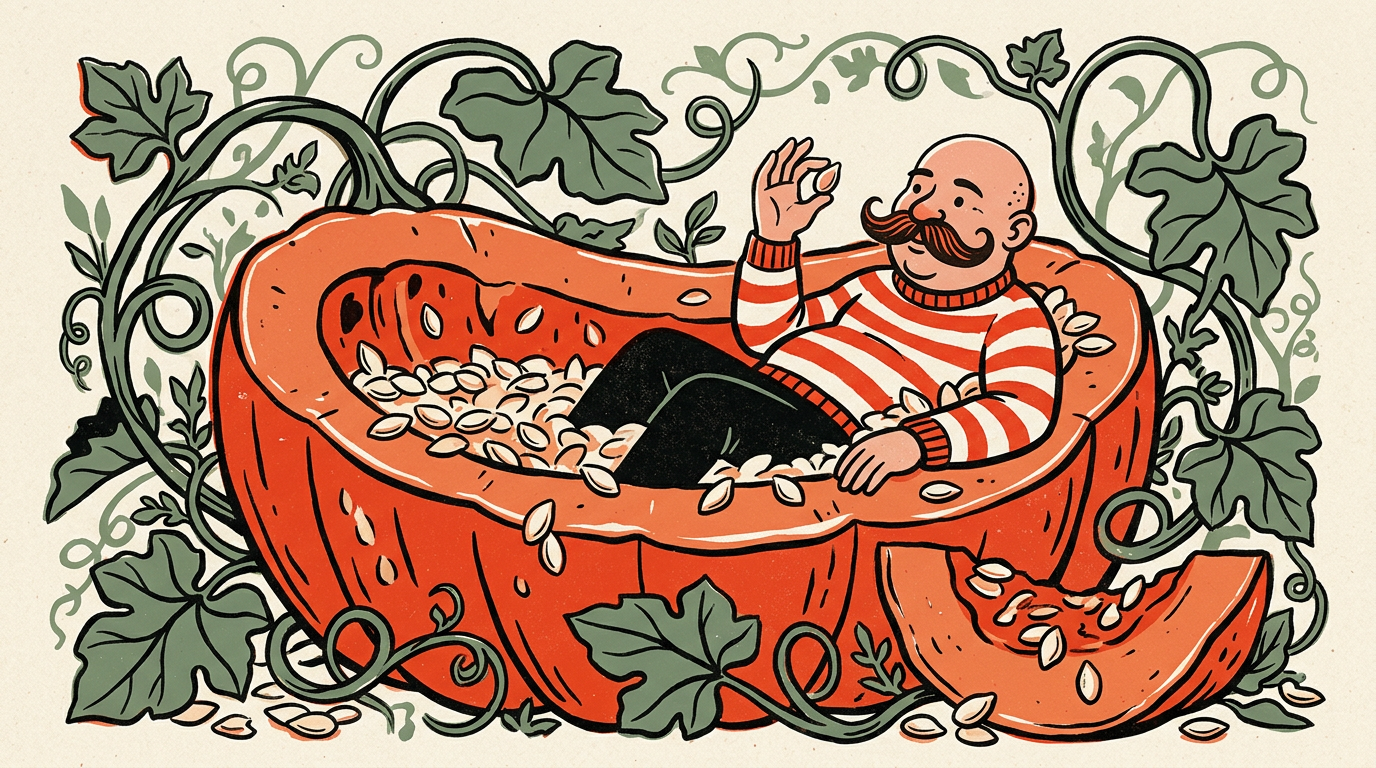
What the clinical trials actually show
The 2014 capsule trial in men is the best controlled human evidence: it was randomized, placebo‑controlled and double‑blind, and it reported both objective hair‑count gains and improved patient ratings over 24 weeks with daily oral PSO. That outcome is notable because high‑quality botanical trials for alopecia are uncommon. Still, it is a single study in one population and has not been independently replicated; systematic reviews and meta‑analyses note the overall evidence base for supplements remains limited and heterogeneous. (19,16,4)1,5,6
On the topical side, a 2021 randomized comparative trial in women compared a pumpkin seed oil preparation with 5% minoxidil foam for three months and observed improvements in several dermoscopic and clinical metrics in the PSO group; this was a head‑to‑head, active‑comparator study rather than a placebo‑controlled trial, and it was short in duration. A laboratory‑to‑clinic formulation study using PSO in niosomes reported enhanced follicle delivery, inhibition of 5α‑reductase in cell assays, reduced inflammatory signaling, and favorable small in‑use measures (a reduced fallen‑hair count and an increased anagen/telogen ratio after eight weeks) in its in‑vivo testing. Those results are encouraging but limited by short follow‑up and small scale. (11,12)2,3
an oral PSO capsule that showed benefit in one trial is not the same thing as a bottle
Why scientists think pumpkin seed oil might matter for pattern hair loss
Most authors invoke a DHT (dihydrotestosterone) mechanism. PSO or pumpkin‑seed extracts have been reported to inhibit 5α‑reductase in preclinical work, and the 2014 trial was built on prior animal data showing antiandrogenic activity. In vitro and cell‑line work with PSO formulations shows measurable 5α‑reductase inhibition and anti‑inflammatory effects, which are biologically relevant to androgenetic alopecia where DHT and local inflammation contribute to follicle miniaturization. Reviews of natural alternatives for male and female pattern hair loss list pumpkin seed oil as one of several plant‑based 5α‑reductase inhibitors under study. These lines of evidence establish plausibility but not proof of clinical efficacy. (19,12,1,8,22)1,3,7,8,9
Topical oil vs oral capsule: not the same question
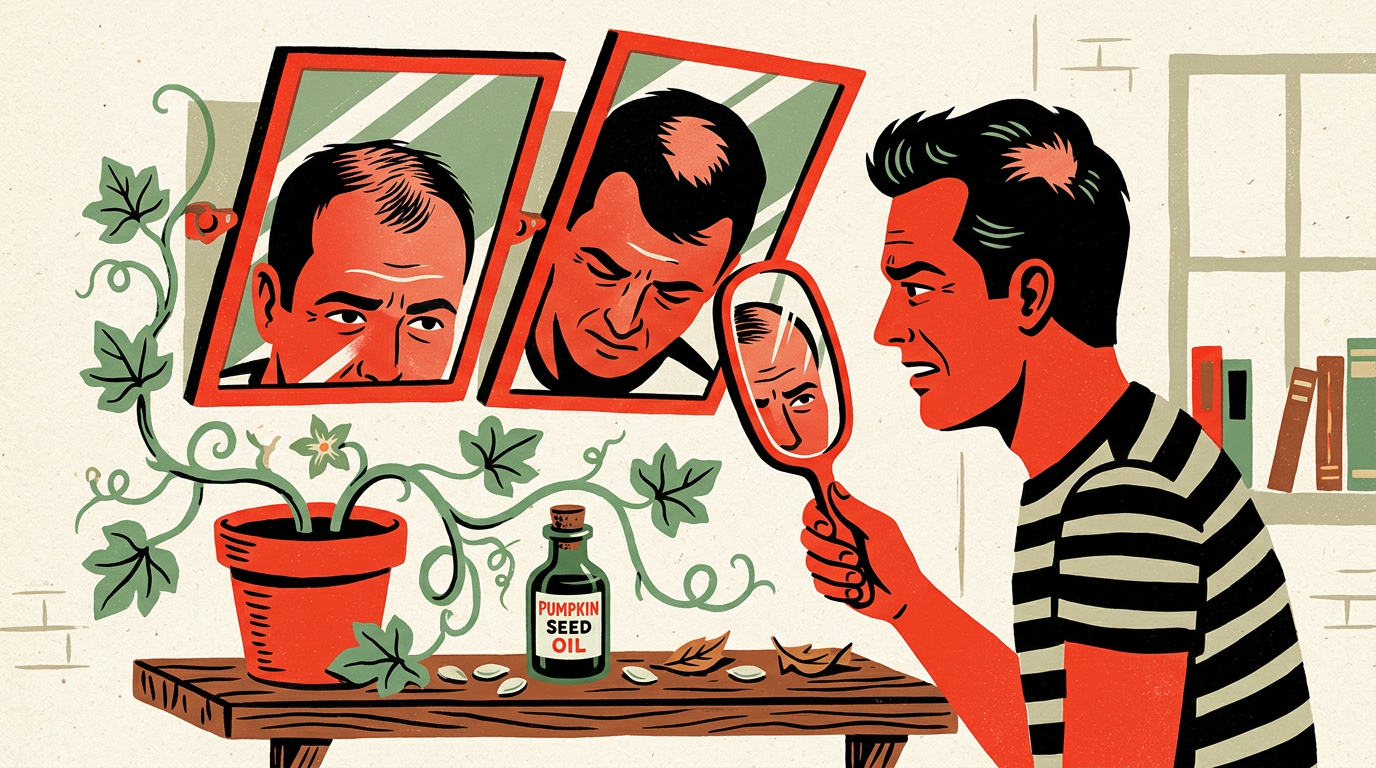
The 2014 positive trial used oral capsules, so its results do not directly answer whether rubbing pure pumpkin seed oil on the scalp will produce the same effect. Topical application introduces different issues: skin penetration, local concentration at the follicle, formulation vehicle, and whether delivery systems (for example niosomes or other nanoparticles) are needed to get active components into the follicle. Several papers explore topical use in animals or formulated topicals and report increased follicle numbers or improved anagen/telogen ratios, but these are mostly preclinical or small early human studies rather than large randomized trials of a simple scalp oil. (19,14,17,12,21)1,3,4,10,11
Put simply: an oral PSO capsule that showed benefit in one trial is not the same thing as a bottle of pumpkin seed oil you rub into your hair. Formulation clearly matters in the available experiments. (12,21)3,4
Safety, limits of the evidence, and talking to a clinician
Reported tolerability was similar between PSO and placebo in the 2014 capsule trial, and several animal studies report no genotoxicity or obvious liver toxicity in short experiments; formulation studies report acceptable skin irritation profiles for their topical preparations. Still, the safety picture is incomplete: most clinical data are limited in duration and size, and systematic reviews caution that dietary‑supplement studies for hair are diverse and often small. Because pumpkin seed oil and related botanicals are discussed as 5α‑reductase inhibitors, anyone considering systemic use should discuss potential hormonal effects and interactions with a physician. (19,17,12,16,8,20)1,3,5,8,11,12
For clinicians and patients the practical implications are straightforward: there is a single, reasonably well‑conducted randomized trial showing benefit from oral PSO in men, and a few smaller topical and preclinical studies that increase plausibility. Replication is missing, comparative effectiveness versus standard treatments is poorly defined, and topical formulations have not been subjected to large placebo‑controlled trials. If hair loss is a cosmetic or medical concern, consulting a dermatologist is the prudent next step before starting supplements or replacing evidence‑based therapies. (19,11,12,16,8,4)1,2,3,5,6,8
In the Botanical Index
Sources
- Effect of pumpkin seed oil on hair growth in men with androgenetic alopecia: a randomized, double-blind, placebo-controlled trial. — Cho YH, Lee SY, Jeong DW, Choi EJ, Kim YJ, Lee JG, Yi YH, Cha HS. · Evidence-based complementary and alternative medicine : eCAM · 2014
- Pumpkin seed oil vs. minoxidil 5% topical foam for the treatment of female pattern hair loss: A randomized comparative trial. — Ibrahim IM, Hasan MS, Elsabaa KI, Elsaie ML. · Journal of cosmetic dermatology · 2021
- Pumpkin Seed Oil-Loaded Niosomes for Topical Application: 5α-Reductase Inhibitory, Anti-Inflammatory, and In Vivo Anti-Hair Loss Effects. — Teeranachaideekul V, Parichatikanond W, Junyaprasert VB, Morakul B. · Pharmaceuticals (Basel, Switzerland) · 2022
- Niosomal delivery of pumpkin seed oil: development, characterisation, and physical stability. — Morakul B, Teeranachaideekul V, Buraphacheep Junyaprasert V. · Journal of microencapsulation · 2019
- Evaluation of the Safety and Effectiveness of Nutritional Supplements for Treating Hair Loss: A Systematic Review. — Drake L, Reyes-Hadsall S, Martinez J, Heinrich C, Huang K, Mostaghimi A. · JAMA dermatology · 2023
- Effects of dietary supplements on androgenetic alopecia: a systematic review and network meta-analysis. — Zhou L, Zhu W, Chen Y. · Frontiers in nutrition · 2025
- Dutasteride-loaded nanostructured lipid carrier for androgenic alopecia treatment - An in vivo study. — Heydari S, Barzegar Jalali M, Kouhsoltani M, Radmehr A, Paiva-Santos AC, Barghi S, Hamishehkar H. · BioImpacts : BI · 2026
- Emerging and traditional 5-α reductase inhibitors and androgen receptor antagonists for male androgenetic alopecia. — Gupta AK, Talukder M, Williams G. · Expert opinion on emerging drugs · 2024
- An overview of herbal alternatives in androgenetic alopecia. — Dhariwala MY, Ravikumar P. · Journal of cosmetic dermatology · 2019
- Beneficial effects of pumpkin seed oil as a topical hair growth promoting agent in a mice model. — Hajhashemi V, Rajabi P, Mardani M. · Avicenna journal of phytomedicine · 2019
- Evaluation of the efficacy and toxicity of oral and topical pumpkin oil on the hair growth of mice. — da Cruz GK, Martins MIM, Antunes FTT, de Souza AH, Wiilland EF, Picada JN, Brum LFDS. · Acta histochemica · 2022
- Scientific Opinion on the substantiation of a health claim related to a combination of thiamin, riboflavin, niacin, pantothenic acid, pyridoxine, D-biotin and pumpkin seed oil and maintenance of normal hair pursuant to Article 13(5) of Regulation (EC) No 1924/2006. — EFSA Panel on Dietetic Products, Nutrition and Allergies (NDA). · EFSA journal. European Food Safety Authority · 2012
Discussion
0 commentsShare experiences, questions and sources. Be kind, and please don't give medical advice. Comments are checked before they appear, and anything that reads like a treatment claim goes to our editors first.
Join the conversation
A free reader account lets you comment and reply to other readers.
No comments yet. Start the discussion.