Origins · Scalp
Scalp oiling: tradition, trend and what the science says
Scalp oiling is an old care ritual whose modern popularity rests on texture, comfort and smell as much as any biological effect. Laboratory work shows coconut oil can change hair-fibre mechanics and has antibacterial activity in vitro; a randomized trial in preterm infants shows topical coconut oil increases skin moisture. Clinical evidence for scalp oiling specifically is thin.
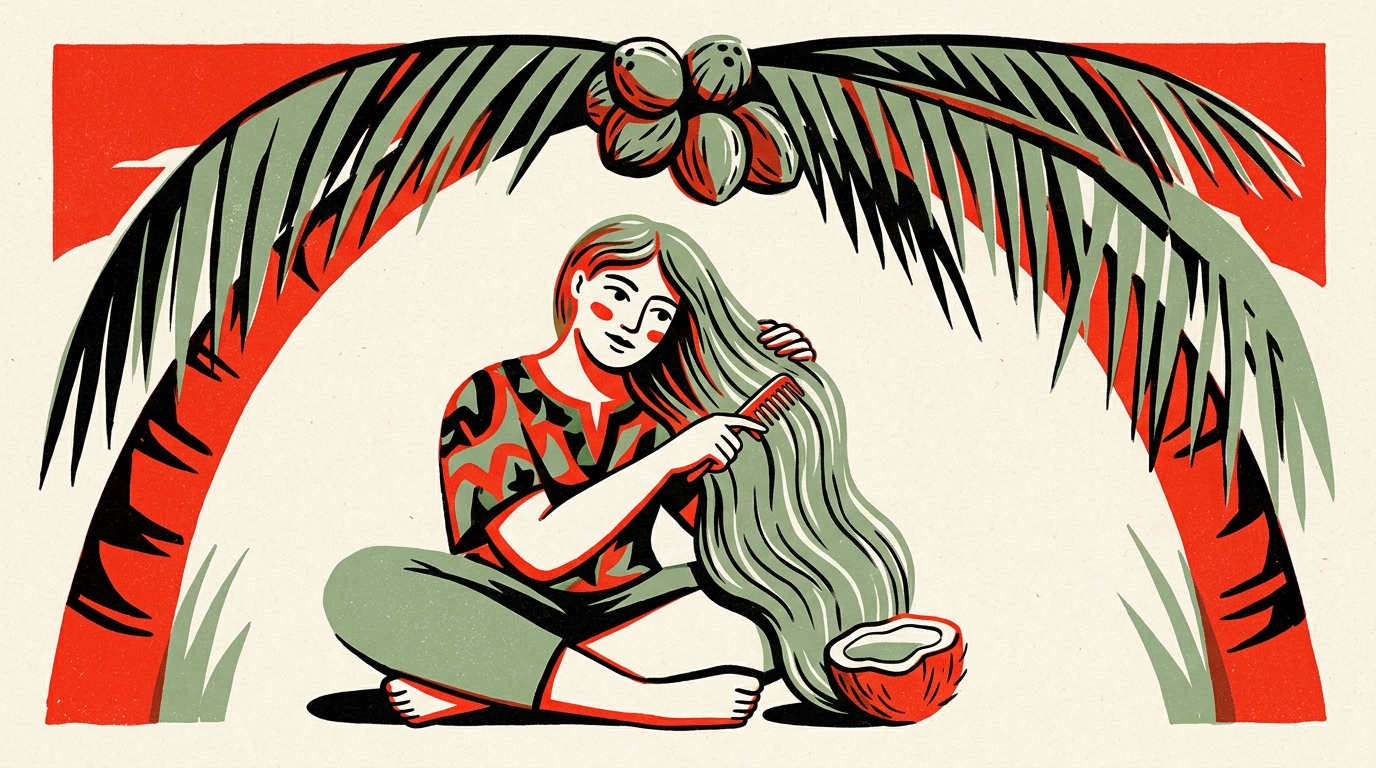
Champi, the South Asian ritual of oiling and massaging the head, is centuries old and gave English one of its stranger etymologies: shampoo comes from the Hindi champo. The practice is cultural as much as cosmetic—about touch, scent and attention as much as hair growth.
Over the past decade champi and “hair oiling” have migrated into mainstream beauty trends. That made scientists ask what the oils actually do to hair and scalp. The studies in this file set are mostly lab work and a few small clinical trials in other contexts; direct, well-controlled trials of scalp oiling for hair growth are not present in the supplied abstracts, so firm conclusions about hair-regrowth effects cannot be drawn from these papers alone.
direct, well-controlled trials of scalp oiling for hair growth are not present in the supplied abstracts
A quick mechanical account: what oils do to the fibre
If you treat hair strands with coconut oil in laboratory conditions, the oil behaves differently from mineral oil and can change how a strand handles stress. Single-fibre testing on washed swatches found that coconut oil penetrated the fibre core, making the core more flexible and thus better at negotiating torsional and tensile stress; differences in mechanical behaviour were most apparent when testing included torsion or after multiple wash cycles, rather than after a single wash alone, and coconut oil outperformed mineral oil in those tests (laboratory hair-swatches, in vitro).1
That paper is a bench study on standardized hair swatches rather than live scalps or people, so it tells us about physical interactions between oil and keratin rather than about how hair looks on a person or how the scalp responds.1
Oils, microbes and dandruff: the laboratory picture
Several in vitro studies show coconut oil has activity against bacteria in laboratory assays. One agar-diffusion study reported susceptibility of various clinical bacterial isolates to coconut oil and highlighted lauric acid as a bactericidal component in those assays (in vitro antibacterial testing). Another lab study found that some types of coconut oil reduced Streptococcus mutans biofilm formation under serial-dilution conditions in vitro.2,3
Laboratory antibacterial activity is not the same as antifungal activity against the scalp yeast species most often implicated in dandruff (Malassezia), and none of the provided abstracts report direct tests of coconut oil versus Malassezia on scalps. So while coconut oil can be antimicrobial in petri-dish experiments, those findings do not establish that coconut oil will improve or worsen dandruff on a human scalp.2,3
Clinical topical effects on skin (not exactly the scalp)

There is at least one randomized clinical trial of topical coconut oil on human skin in the supplied abstracts: in preterm neonates, daily application of coconut oil increased skin moisture and supported skin integrity compared with control, in a 90-infant randomized trial. That is a controlled human result showing coconut oil can improve skin hydration and some aspects of barrier function in a vulnerable population (randomized controlled trial in neonates).4
Neonatal skin and adult scalp skin are not the same tissue, but this trial does show cocoat-derived oil can be an effective emollient in humans under controlled conditions. It also underlines an important point: outcomes depend on population and context, so results in infants do not automatically translate to adult scalps or to claims about hair growth.4
Massage, circulation and the missing trial
Scalp massage is the ritual partner of oiling, and it gets a lot of the credit in popular accounts. It’s plausible that mechanical stimulation alters local blood flow and follicle biology, and small, older human studies outside this file have explored massage effects. The abstracts supplied here, however, contain no controlled human trial of scalp massage where hair thickness or growth was the primary endpoint, so we cannot summarize such a study from these papers.
That silence matters: much of the belief that massage or oiling increases hair thickness rests on plausible mechanisms and small or uncontrolled observations. The provided literature supports mechanical and moisturising effects of coconut oil at the bench and shows it can hydrate skin in a randomized neonatal trial, but it does not establish a clinical hair-growth benefit for scalp oiling.1,4
How to oil without making things worse
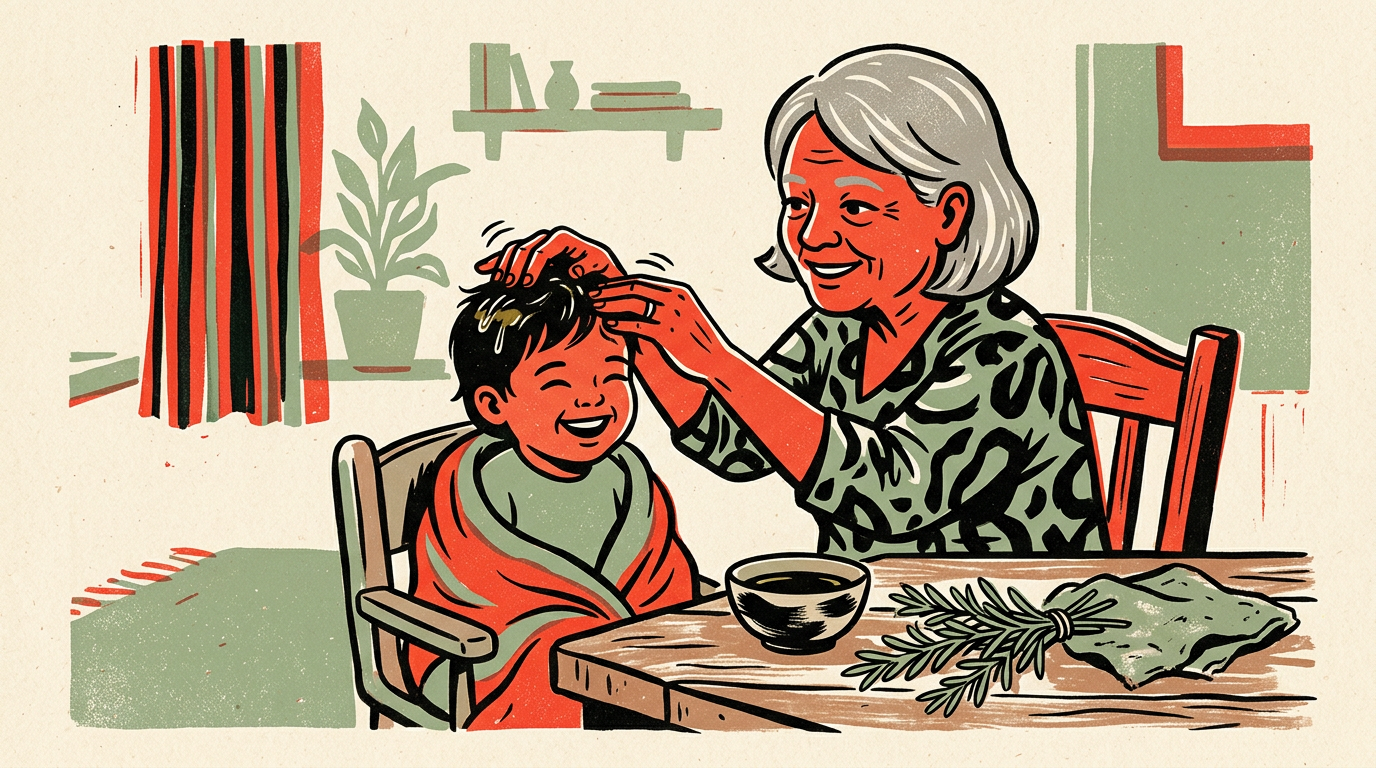
If you choose to oil, the bench data suggest coconut oil can penetrate and soften the fibre, which may help hair tolerate tangles and mechanical stress; that is a purely material benefit observed in lab tests (in vitro). Sleeping with oil on overnight will expose hair to repeated mechanical and wash stresses that are where the differences between oils show up in tests, so the way you use oil matters (lab hair-fibre data).1
coconut oil can penetrate and soften the fibre, which may help hair tolerate tangles and mechanical stress
Coconut oil can also act as an emollient on skin in humans: a randomized trial in preterm infants showed increased skin moisture after coconut oil application, but that was a neonatal population under medical supervision and not a trial of scalp oiling for adults (controlled human trial). Patch-test any oil on a discreet area before wide use if you have sensitive skin or dermatitis, and avoid heavy occlusion if you have active seborrheic dermatitis or oily, flaking scalps—occlusive oils can trap sebum and debris and may worsen symptoms in some people (clinical prudence; no direct scalp trial in these abstracts).4
Laboratory antimicrobial findings are interesting but limited. Coconut oil and some coconut-derived formulations inhibit certain bacteria and reduce bacterial biofilms in vitro, yet those results do not prove an effect on the scalp microbiome or on dandruff-causing yeasts in live human studies. Treating a chronic scalp condition should involve a clinician when symptoms persist or worsen.2,3
Bottom line
Scalp oiling sits at the intersection of ritual and utility. Bench work shows coconut oil can enter the hair shaft and change how strands handle mechanical stress, and a human randomized trial (in preterm infants) shows topical coconut oil increases skin moisture; several in vitro papers report antibacterial activity. But the supplied abstracts do not include controlled clinical trials of scalp oiling for hair growth or for common scalp conditions such as dandruff, and they do not test coconut oil against the specific scalp yeasts most implicated in flaking.1,2,3,4
If you oil for comfort, scent or smoothing, those are legitimate reasons. If you oil to influence hair growth or to treat a scalp disease, the evidence in these abstracts is thin and indirect. See a dermatologist for persistent scalp problems rather than relying on oiling alone.
In the Botanical Index
Sources
- Single hair fiber assessment techniques to discriminate between mineral oil and coconut oil effect on hair physical properties. — Kaushik V, Chogale R, Mhaskar S. · Journal of cosmetic dermatology · 2021
- Antimicrobial Potential of Cocos nucifera (Coconut) Oil on Bacterial Isolates. — Bhardwaj V. · Advances in experimental medicine and biology · 2025
- The Effect of Coconut and Frankincense Oils on the Biofilm Growth of Streptococcus mutans. — Alghamdi N, Alshamrani L, Alboryah S, Alsenan JF, Alshehri T, Abogazalah NN, Balhaddad AA. · F1000Research · 2025
- The effects of coconut oil and moisturising lotion on skin condition and vital signs in preterm neonates: A randomised controlled trial. — Güner Başara S, Kahraman Berberoğlu B, Çalişir H, Sözkesen Z, Emirhan M, Şahin S. · Journal of pediatric nursing · 2026
Discussion
0 commentsShare experiences, questions and sources. Be kind, and please don't give medical advice. Comments are checked before they appear, and anything that reads like a treatment claim goes to our editors first.
Join the conversation
A free reader account lets you comment and reply to other readers.
No comments yet. Start the discussion.