The case for a boring skincare shelf
After twenty-two winters of growing herbs and watching hands, a grower argues the kindest routine is the one you stop changing.

By Ada WhitlockHerb grower and soapmaker, 22 years
This is a guest column. The views are the writer’s own and are not the findings of Journal Botanica.
Every spring a box arrives at the farm from someone who means well. Inside are the season’s new serums: a peptide this, a fermented that, a bottle with a dropper and a promise. I try them, because I am curious and because people send them to me. And every spring I end up back where I started, with three jars on a shelf by the sink.
I have grown calendula, comfrey and plantain on the same three acres for twenty-two years. I am not a dermatologist, and nothing I say here should be read as medical advice. What I am is someone who has watched a great many hands, including my own, go through a great many winters. And I have come to believe that the most useful thing most of us can do for our skin is to buy less, change less, and wait longer.
Novelty is not the same as progress
The skincare aisle runs on the idea that last year’s routine is already out of date. Some of the new science is genuinely good. The Journal’s own reporting on retinoids and sunscreen makes that case well, and I would not argue with it. But a lot of what is sold as new is an old idea in a more expensive bottle, and a lot of what is sold as essential has never been tested against doing nothing at all.
When you change five products at once, you learn nothing. If your skin improves, you do not know why. If it gets worse, you do not know which one to blame. The people I know with the calmest skin are not the ones with the most products. They are the ones who found three things that worked and then, crucially, stopped looking.
What a boring shelf looks like
Mine is a gentle cleanser that does not squeak, a sunscreen I will actually wear, and a plain balm for the parts of me that crack in January: knuckles, heels, the corners of the mouth. That is all. The balm is the one thing I make myself, from flowers I grow, and I will be honest about that below.
I am not asking anyone to copy me. I am asking you to try an experiment. Take away everything you are not sure about. Keep it away for six weeks, which is about as long as it takes skin to show you anything. Then add things back one at a time, and only if you miss them.
Old does not mean proven, and that is fine
Calendula has been rubbed into chapped skin for centuries, and the modern evidence for it is thinner than its reputation. I think it is worth saying that out loud. My grandmother’s confidence in it is not a clinical trial, and neither is mine. But I also think there is room, on a site like this one, for the knowledge that comes from long use and close attention, as long as we label it honestly and do not dress it up as more.
What I trust most is not any single ingredient. It is patience. Skin is slow. Seasons are slow. The routines that last are the ones simple enough to keep doing when the novelty wears off, and that, to my mind, is the whole case for a boring shelf.
Ada’s pick
Chosen by the writer, not tested or endorsed by Journal Botanica. No one paid for these recommendations.
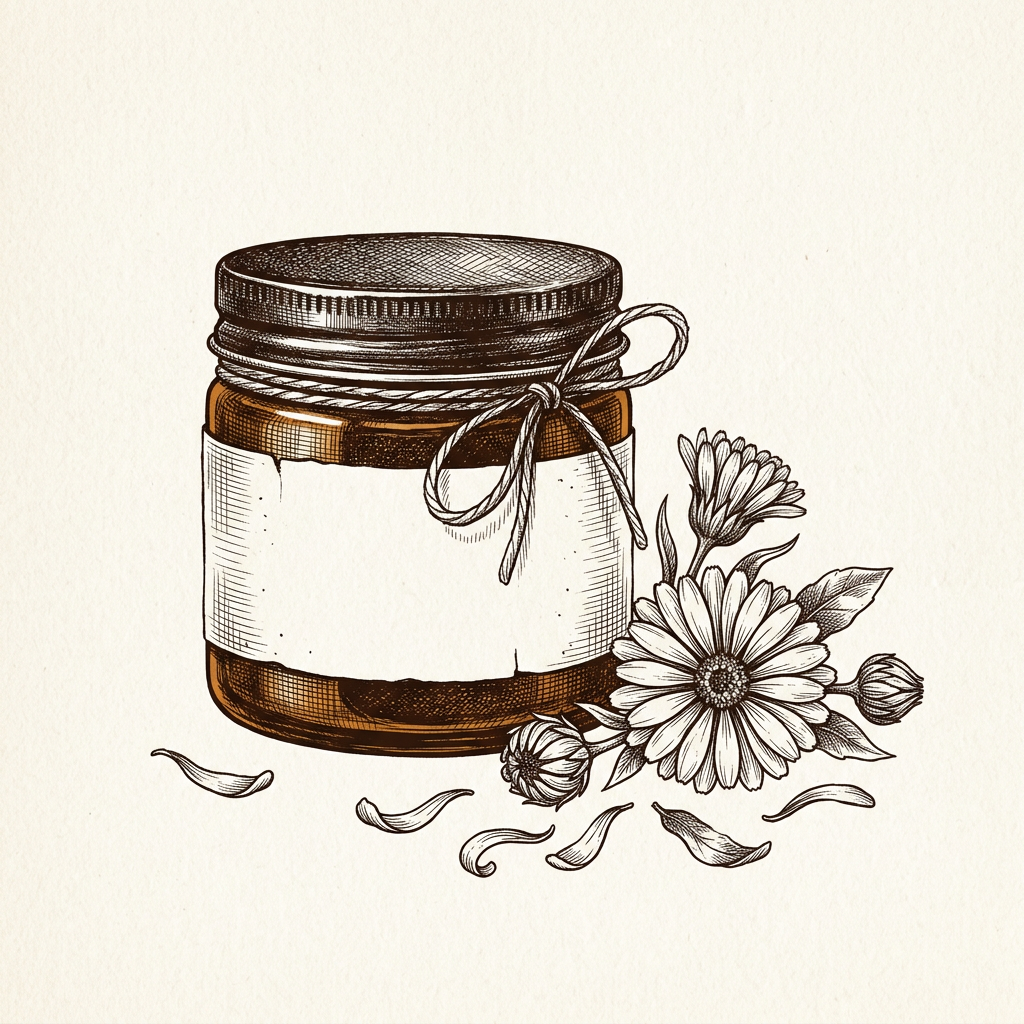
Whitlock Hollow FarmCalendula Hand & Heel Balm
“This is the one thing on my shelf I make myself. I keep a tin by the sink from November to April and use it on my knuckles after every wash.”
Disclosure: Ada Whitlock owns or works for Whitlock Hollow Farm.
About the writer
Ada Whitlock
Herb grower and soapmaker, 22 years
Ada Whitlock grows calendula, comfrey and plantain on three acres in the hills of western Massachusetts, where she has made small-batch balms and soaps since 2004. She teaches a seasonal workshop on growing a kitchen herb bed and writes occasionally about slow, simple care. She is not a medical professional.
Disclosure: Owns Whitlock Hollow Farm, which makes and sells herbal balms and soaps.
Guest columns are the writer’s own opinion. They are edited for clarity and health claims, not for agreement.
Discussion
0 commentsShare experiences, questions and sources. Be kind, and please don't give medical advice. Comments are checked before they appear, and anything that reads like a treatment claim goes to our editors first.
Join the conversation
A free reader account lets you comment and reply to other readers.
No comments yet. Start the discussion.