Botanical Index / everything about
Tea tree
Acne ally from Australia, but cranky when oxidized
Melaleuca alternifolia
The short version
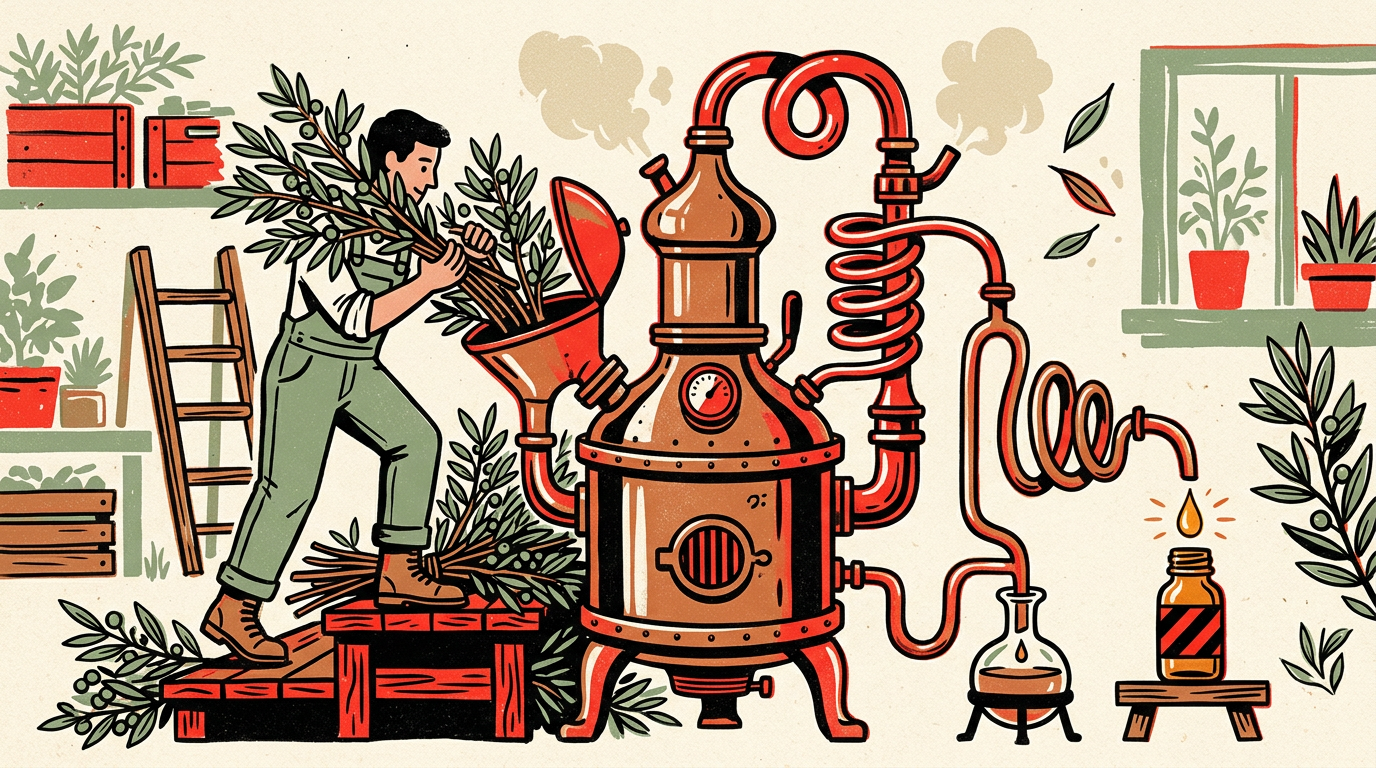
Steam-distilled essential oil from an Australian shrub. People use it, diluted, on acne-prone skin and sometimes on scaly, itchy feet. It works best fresh; old, oxidized oil is more irritating.
- Family
- Myrtaceae
- Part used
- Leaves (essential oil)
- Comes from
- New South Wales and Queensland, Australia
Good for?
Today it shows up in low‑percentage gels, cleansers, and spot sticks for acne. You’ll also find it in foot creams and deodorizing washes, leaning on its antimicrobial punch. Formulation and dose matter: lower percentages in well‑built vehicles usually balance effect with comfort better than neat oil.
Does it actually work?
Solid.
Reviews pooling several trials agree it does something.
Evidence grade 5 out of 5.
“A 2026 systematic review and meta-analysis of seven studies (445 people) found tea tree oil products modestly reduced acne severity versus controls, with mostly mild local reactions.”
What the studies say
A 2026 systematic review and meta-analysis of seven studies (445 people) found tea tree oil products modestly reduced acne severity versus controls, with mostly mild local reactions. The trials were small and used varied formulations, so confidence is limited, but the signal is consistent. Lab studies repeatedly show activity against acne bacteria and dermatophyte fungi, which supports those clinical hints. For fungal foot or nail infections, clinical evidence remains limited and mixed; any benefits appear modest. Formulations that protect the oil and control release can help stability and may lower irritation.
What's inside
- 30–48%Terpinen-4-olMajor component
- 10–28%γ-Terpinene
- 5–13%α-Terpinene
- 0–15%1,8-Cineole (eucalyptol)
- 0.5–8%p-Cymene
- 1.5–8%α-Terpineol
Read this first
Can sting, dry, or cause allergic contact dermatitis, especially if the oil has oxidized; patch test and use diluted. Keep it away from eyes and do not swallow. Rare case reports have linked tea tree oil to breast tissue changes in boys; the link is debated, so avoid prolonged chest use in children.
The Expert Panel for Cosmetic Ingredient Safety concluded Melaleuca alternifolia–derived ingredients are safe in cosmetics as currently used when formulated to be non‑sensitizing and with steps to minimize oxidation. Commonly labeled as Melaleuca Alternifolia (Tea Tree) Leaf Oil on ingredient lists.
The stories
1 in the JournalEvidence Check · Tea tree
Tea tree oil: real antimicrobial, real allergy risk
Laboratory work and small clinical trials support tea tree oil’s antibacterial and antifungal activity, and a recent meta-analysis found topical tea tree reduced acne severity; reviews and formulation studies also warn of local irritation and stability problems. Current evidence is useful but limited, and safety concerns in topical use are repeatedly raised.
- Skin
- Body
Reviewed
Sources
- Safety Assessment of Melaleuca alternifolia (Tea Tree)-Derived Ingredients as Used in Cosmetics. — Fiume MM, Bergfeld WF, Belsito DV, Cohen DE, Klaassen CD, Liebler DC, Peterson LA, Shank RC, Slaga TJ, Snyder PW, Heldreth B. · International journal of toxicology · 2026
- Efficacy and Safety of Melaleuca alternifolia (Tea Tree) Oil for Acne-A Systematic Review and Meta-Analysis. — Ye Y, Lim JJ, Huang Z, Chew FT. · Phytotherapy research : PTR · 2026
- Deciphering the Broad Antimicrobial Activity of Melaleuca alternifolia Tea Tree Oil by Combining Experimental and Computational Investigations. — Iacovelli F, Romeo A, Lattanzio P, Ammendola S, Battistoni A, La Frazia S, Vindigni G, Unida V, Biocca S, Gaziano R, Divizia M, Falconi M. · International journal of molecular sciences · 2023
- Rhamnolipids and Essential Oils: A New Approach to Managing Bacteria Associated with Skin Diseases. — Leite LA, Sereia MOP, Mestieri GB, Neves RC, Dos Santos AM, Carvalho SG, Mendes CR, Chorilli M, Dilarri G, Contiero J. · Microorganisms · 2026
- Sustainable thymol-based formulations with amoxicillin and Melaleuca alternifolia essential oil. — Edis Z, Regala JZ. · Frontiers in chemistry · 2026
- In vitro and in silico validation of the therapeutic potential of Tea tree (Melaleuca alternifolia) oil through GC/MS integrated profiling, and molecular dynamic simulation. — Sankaranarayanan P, Parvathy J, Sreedevi A, Sebastian D, Vasu ST. · In silico pharmacology · 2026
- Tea Tree Oil — 2006
- Hydrolyzed collagen-modified bacterial cellulose loaded with tea tree oil for antibacterial activity against acne-associated bacteria. — Salawudeen T, Jomrit J, Kaewpradit S, Nokkaew N, Jantarat C. · RSC advances · 2026
- Antifungal Activity of Tea Tree (Melaleuca alternifolia Cheel) Essential Oils against the Main Onychomycosis-Causing Dermatophytes. — Mingorance Álvarez E, Villar Rodríguez J, López Ripado O, Mayordomo R. · Journal of fungi (Basel, Switzerland) · 2024
- Evaluation of tea tree oil physicochemical features and its antimicrobial activity against Cutibacterium acnes (Propionibacterium acnes) ATCC 6919 — Ossa-Tabares JC, Llanos CJ, García AM. · Biomedica : revista del Instituto Nacional de Salud · 2020
- Efficacy and safety of Melaleuca alternifolia (tea tree) oil for human health-A systematic review of randomized controlled trials. — Kairey L, Agnew T, Bowles EJ, Barkla BJ, Wardle J, Lauche R. · Frontiers in pharmacology · 2023
- Antimicrobial and Anti-Infective Potential of Herbal Creams in Dermatology: Efficacy, Safety, and Challenges in Skin Infection Management. — Brar GS, Nandy SK, Sharma A, Siddiqui AJ, Sharma L. · Infection and drug resistance · 2025
- Tea Tree Oil: Properties and the Therapeutic Approach to Acne-A Review. — Nascimento T, Gomes D, Simões R, da Graça Miguel M. · Antioxidants (Basel, Switzerland) · 2023
- The Therapeutic Potential of Essential Oils in Managing Inflammatory Skin Conditions: A Scoping Review. — Dontje AEWK, Schuiling-Veninga CCM, van Hunsel FPAM, Ekhart C, Demirci F, Woerdenbag HJ. · Pharmaceuticals (Basel, Switzerland) · 2024
- Evaluating efficacy, safety, and innovation in skin care applications of essential oils: a systematic review. — Pezantes-Orellana C, German Bermúdez F, Montalvo J, Packer T, Orellana-Manzano A. · Frontiers in medicine · 2025
- Formulation, Optimization, and Comprehensive Characterization of Topical Essential Oil-Loaded Anti-Acne Microemulgels. — Kola-Mustapha AT, Raji MA, Alzahrani YA, Binsaeed NH, Adam DR, Shameh RA, Garaween NM, Garaween G. · Gels (Basel, Switzerland) · 2025