Research Desk · Face oils
Face oils for oily skin: linoleic vs. oleic, ranked
The idea that 'linoleic oils are better for oily, acne-prone skin' rests largely on small lab studies and a few pilot clinical observations; the literature here is promising but mostly preclinical and frequently tests oils inside blends or nano‑formulations.

Formulators and many skin-care writers separate face oils into a loose shorthand: linoleic-rich oils for oilier, acne-prone skin; oleic-rich oils for drier skin. The controlled evidence that directly tests that shorthand is thin, but several preclinical studies and a few small human observations point toward real, mechanistic differences worth understanding before you pick a bottle.1,2,3
Below I’ll walk through what the available abstracts show about linoleic versus oleic thinking, list which botanical oils appear in the peer-reviewed record, explain where cannabinoids and hemp-derived ingredients fit, and flag how weak (or absent) the human-trial data are.

What the fatty acids are thought to do — and what studies actually tested
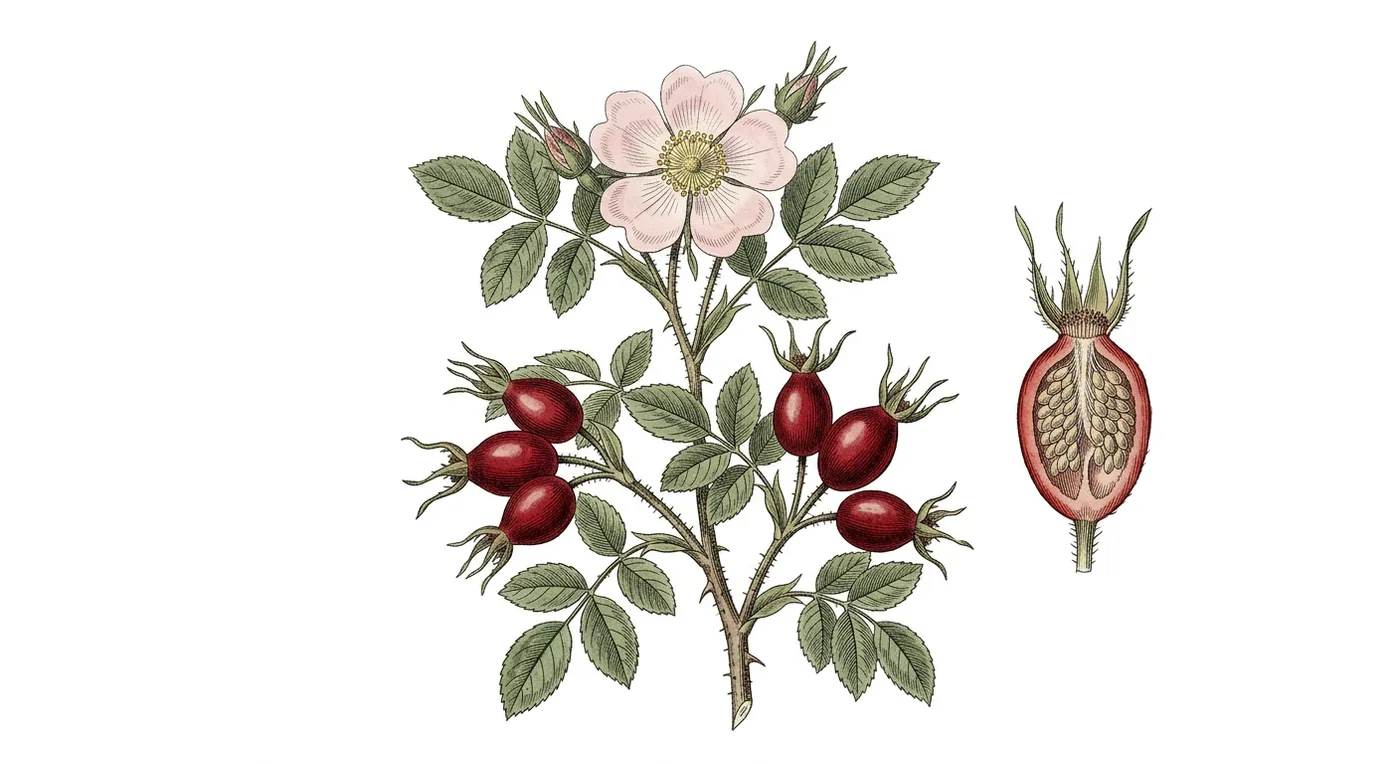
Linoleic acid shows up in the literature mainly via linoleic-rich oil sources such as rosehip and hemp seed. In cell and sebaceous-gland models, interventions linked to these plants affect sebocyte lipid production and inflammatory signalling, which is the mechanistic rationale for preferring linoleic-rich oils on oilier skin types.1,2,3
Linoleic acid shows up in the literature mainly via linoleic-rich oil sources such as rosehip and hemp seed.
Specifically, isolated cannabidiol (CBD) inhibited lipogenic signalling in cultured human sebocytes and in human skin organ culture models that were stimulated by several pro-lipogenic agents, including a combination of linoleic acid and testosterone; that experiment shows sebocyte activity can be modified in vitro but does not demonstrate a clinical effect in people with acne or oily skin.2
Hemp seed extracts reduced Propionibacterium acnes–triggered inflammatory markers and downregulated lipogenesis pathways in sebocyte and keratinocyte models, supporting an anti‑inflammatory and anti‑lipogenic action in vitro rather than proving an on‑skin outcome in patients.1
For rosehip, the peer‑reviewed record here mostly tests it inside formulations or reviews its phytochemical profile and historical use; those reports describe sebum‑regulating and antimicrobial potential but do not isolate rosehip oil in well‑controlled human trials for oily skin.3,4,5,6
Conspicuously, the abstracts supplied do not include direct, controlled comparisons of oleic‑rich oils (for example, olive or marula) versus linoleic‑rich oils in people with oily or acne‑prone skin, so statements about oleic acids disrupting the barrier are not supported by these particular abstracts.
statements about oleic acids disrupting the barrier are not supported by these particular abstracts.
Which oils appear in the literature, and how they were tested

Rosehip appears repeatedly in reviews and in formulation work; rosehip-containing nanoemulsions and nanoemulsion gels have been evaluated for antimicrobial, anti‑inflammatory and permeation outcomes, but these are formulations combining rosehip with other actives (for example, retinoids), not trials of rosehip oil alone.3,4,5,6
Hemp seed shows up in two different ways: as seed extracts or oils that were tested in vitro against P. acnes and sebocyte lipogenesis, and as a vehicle ingredient in cannabinoid-containing ointments and pilot human studies. The hemp seed hexane extract work reduced inflammatory cytokines and modulated AMPK and AKT/FoxO1 signalling in sebocyte models, which is relevant to sebum synthesis in the lab.1,7
Grapeseed and many boutique carrier oils are commonly discussed among formulators but are not represented in these abstracts with direct experimental data, so they can’t be ranked from this set of papers.
The small acne and sebocyte studies behind the 'linoleic' idea

The strongest mechanistic human‑cell evidence is that CBD suppresses sebocyte lipogenesis and inflammatory signalling in cultured human sebocytes and in human skin organ culture, demonstrating a pathway by which hemp‑derived ingredients could reduce sebum production in a model system.2
Complementing that, hemp seed hexane extract lowered P. acnes–induced inflammatory markers and inhibited lipogenesis pathways in keratinocyte and sebocyte models, again giving preclinical support for an anti‑acne rationale tied to hemp seeds rather than proving clinical benefit.1
Formulation studies that include rosehip oil (for example, nanoemulsions combined with retinoids or isotretinoin) report improved stability, antimicrobial activity, and enhanced skin penetration for the combined product, but those outcomes reflect the full formulation (retinoid plus botanical oil) rather than the action of rosehip alone.3,4
In short, the linoleic argument is supported by coherent preclinical signals from sebocyte and skin‑organ models and by formulation research, but not by multiple, well‑powered randomized trials of single oils on oily or acne-prone faces.1,2,3,4
Where cannabinoids and hemp derivatives fit in

A cluster of narrative and systematic reviews concludes that topical cannabinoids—most notably CBD—have anti‑inflammatory, antioxidant and sebostatic effects in preclinical work, and that early clinical observations are encouraging but small and heterogeneous; formulation and delivery remain major issues for translation to consistent on‑skin outcomes.8,9,10,11,12,13,14
Nanoformulation strategies (lipid nanoparticles, nanoemulsions, micelles and similar approaches) improve CBD’s dermal delivery in model systems and are a recurring theme in the reviews, which is why many hemp/CBD products are developed as engineered topical systems rather than straight carrier‑oil serums.10,11
A tiny human pilot (an ointment combining high‑concentration CBD, cannabigerol and hemp seed oil) reported improvements in biophysical skin parameters in nine people with atopic dermatitis, but that study does not demonstrate efficacy for acne or oily skin and the formulation contained multiple active ingredients.7
Practical takeaways and where the evidence is thin
If you’re choosing an oil for oily or acne‑prone skin based on the peer‑reviewed abstracts here, the safest inference is mechanistic: linoleic‑rich sources such as rosehip and hemp seed show laboratory signals that align with reduced sebocyte lipogenesis and inflammation, but clinical proof in people is limited and often confounded by co‑formulated actives.1,2,3,4
Many cannabinoid reviews point to CBD’s sebostatic potential, yet they also emphasise that most clinical data are early‑phase, small, or combined with other ingredients, so clinical recommendations remain provisional.8,9,10,11,12,13,14
Common non‑plant oils often suggested for oilier skin types—such as squalane or jojoba—do not appear in the abstracts you supplied, so this synopsis can’t evaluate them; likewise, claims about oleic acid breaking down the barrier are not demonstrated in these particular papers.
For anyone with active acne or persistent oiliness, the literature here supports considering linoleic‑rich options and paying attention to formulation (vehicles, particle size, and co‑formulants), but it does not replace medical evaluation. See a dermatologist for treatment decisions, especially before combining botanical products with prescription actives.3,4,10,11
In the Botanical Index
Sources
- The ameliorative effect of hemp seed hexane extracts on the Propionibacterium acnes-induced inflammation and lipogenesis in sebocytes. — Jin S, Lee MY. · PloS one · 2018
- Cannabidiol exerts sebostatic and antiinflammatory effects on human sebocytes. — Oláh A, Tóth BI, Borbíró I, Sugawara K, Szöllõsi AG, Czifra G, Pál B, Ambrus L, Kloepper J, Camera E, Ludovici M, Picardo M, Voets T, Zouboulis CC, Paus R, Bíró T. · The Journal of clinical investigation · 2014
- Evaluation of a Retinol Nanoemulsion Gel Enriched with Black Seed and Rosehip Oils for Acne Management. — Reddy A, Ravichandran A, Magham SV. · Drug research · 2025
- Self-Nanoemulsion Loaded with a Combination of Isotretinoin, an Anti-Acne Drug, and Quercetin: Preparation, Optimization, and In Vivo Assessment. — Hosny KM, Al Nahyah KS, Alhakamy NA. · Pharmaceutics · 2020
- Unveiling the mechanisms for the development of rosehip-based dermatological products: an updated review. — Oargă Porumb DP, Cornea-Cipcigan M, Cordea MI. · Frontiers in pharmacology · 2024
- Safety Assessment of Rosa canina-derived Ingredients as Used in Cosmetics. — Johnson W, Bergfeld WF, Belsito DV, Hill RA, Klaassen CD, Liebler DC, Marks JG, Shank RC, Slaga TJ, Snyder PW, Gill LJ, Heldreth B. · International journal of toxicology · 2022
- Evaluation of Biophysical Parameters of the Skin of Patients With Atopic Dermatitis After Application of an Ointment Containing 30% Cannabidiol and 5% Cannabigerol. — Burczyk DD, Wcisło-Dziadecka D, Olczyk P, Chełmecka E, Burczyk WK. · Clinical, cosmetic and investigational dermatology · 2025
- CBD-Containing Hemp Extracts and Isolated CBD for Acne: A Systematic Review of Anti-Inflammatory Mechanisms, Clinical Signals and Sustainability. — Komane B, Kaye T. · Molecules (Basel, Switzerland) · 2026
- The Therapeutic Potential of Cannabidiol in Skin Conditions. — Redmond MC, Finn DP. · Journal of cosmetic dermatology · 2025
- Cannabinoids for Dermatological Applications: Mechanistic Insights, Clinical Evidence, and Emerging Nanotechnology-Enabled Delivery Strategies. — Pareek A, Kumari L, McMahon LR, Chuturgoon A, Pareek A. · Pharmaceutics · 2026
- Nanoformulated cannabidiol for skin disorders: A GRADE-based systematic review of therapeutic evidence and efficacy. — Ahmed B, Kaur S, Naryal S, Devi A, Kathpalia M, Shah RM, Kaur IP. · European journal of pharmaceutics and biopharmaceutics : official journal of Arbeitsgemeinschaft fur Pharmazeutische Verfahrenstechnik e.V · 2025
- Cannabidiol in Skin Health: A Comprehensive Review of Topical Applications in Dermatology and Cosmetic Science. — Rusu A, Farcaș AM, Oancea OL, Tanase C. · Biomolecules · 2025
- The Anti-Inflammatory Effects of Cannabidiol (CBD) on Acne. — Peyravian N, Deo S, Daunert S, Jimenez JJ. · Journal of inflammation research · 2022
- Cannabis sativa and Skin Health: Dissecting the Role of Phytocannabinoids. — Martinelli G, Magnavacca A, Fumagalli M, DellʼAgli M, Piazza S, Sangiovanni E. · Planta medica · 2022
Discussion
0 commentsShare experiences, questions and sources. Be kind, and please don't give medical advice. Comments are checked before they appear, and anything that reads like a treatment claim goes to our editors first.
Join the conversation
A free reader account lets you comment and reply to other readers.
No comments yet. Start the discussion.